Careers at SWORT

Build systems that decide what data to trust.

SWORT works with engineers and researchers across embedded systems, avionics, controls, sensing, simulation, and aerospace electronics.

What the work is

Three problems we keep returning to.

Embedded intelligence

Firmware that runs deterministically on constrained targets and still makes decisions worth trusting. Register-level bring-up, interrupt and DMA architecture, RTOS scheduling, and the interfaces between hardware and the software that depends on it.
Aerospace electronics

Boards that survive contact with a real vehicle. Mixed-signal layout, power integrity, grounding and decoupling strategy, connector and harness decisions, and the DFM work that separates a schematic from something manufacturable.

Verification under uncertainty

Deciding what a system knows when its sensors disagree. Residual analysis, fault isolation, hardware-in-the-loop testing, and building the evidence that a design behaves as specified when inputs are noisy or partly wrong.

How work happens

Small teams, direct ownership, written reasoning.

01

Small project teams

Work is organised per program, not per department. You will usually be one of a small number of engineers on a given effort, and you will know what the rest of it depends on.

02

Direct technical ownership

Subsystems are owned end to end, from requirement through bring-up to verification. There is no layer between you and the consequences of a design decision.

03

Research and customer programs

Some work is internal research on sensor trust and system integrity. Some is scoped customer engineering with fixed deliverables. Both exist, and they are staffed differently.

04

Contractor and collaboration

Most engagements today are contract, project-based, or research collaborations rather than full-time employment. We say which one applies before any technical conversation starts.

05

Documentation and review

Design reasoning is written down. Firmware and layouts are reviewed, and a rejection comes with a rationale. Deliverables include the schematics, source, and test records, not just the artifact.

06

Remote by default

Work is remote unless a program needs hands on hardware, in which case bench time is arranged around the DC and Maryland area. Requirements are stated per engagement, not assumed.

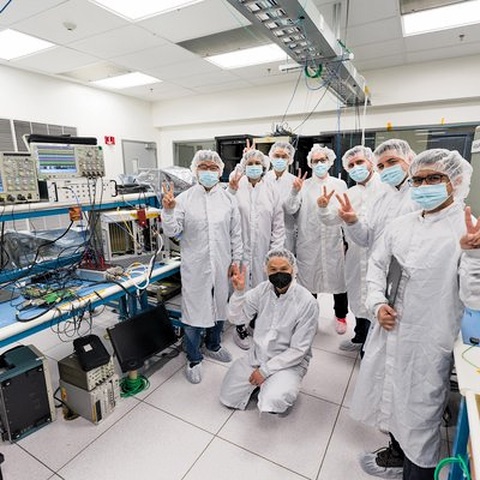
An electronics laboratory with oscilloscopes and instrument racks along one wall, and engineers in laboratory coats at the benches.

// Where bench work happens

Hardware work takes place at instrumented benches with oscilloscopes, logic analysis, and power measurement available. Some verification runs in shared technical facilities rather than premises owned by SWORT, and which applies is stated per engagement.

Opportunities

Where SWORT recruits.

These are the disciplines we work in and take introductions for. Status is stated honestly for each one.

Confirmed active opening a funded role being actively filled. Project-dependent opens when a specific program is funded. Rolling interest reviewed continuously, with no committed start date.

No category below is a confirmed active opening today. Nothing here is a guaranteed vacancy, and we will tell you which of the three applies before taking your time.

Embedded Systems

Firmware in C on STM32-class targets: register-level peripheral work, interrupt and DMA architecture, RTOS task design, and board bring-up through sensor validation.

Status
Rolling interest
Engagement
Contract or project-based
Location
Remote, occasional bench time
Express Interest

Avionics and PCB

Schematic capture and layout in KiCad or Altium: mixed-signal boards, controlled impedance, power integrity, grounding and decoupling strategy, and DFM-clean output.

Status
Project-dependent
Engagement
Per project
Location
Remote
Express Interest

Controls and Estimation

Attitude and state estimation, filter design and tuning, and control law implementation that has to run on an embedded target rather than only in a notebook.

Status
Rolling interest
Engagement
Contract or project-based
Location
Remote
Express Interest

Simulation and Validation

Hardware-in-the-loop rigs, fault injection, sensor and disturbance models, and the test plans that decide whether a system has actually been verified or only exercised.

Status
Rolling interest
Engagement
Project-based
Location
Remote
Express Interest

Research

Sensor trust, residual consistency, and fault isolation methods. Collaboration with researchers and students on publishable work, scoped case by case.

Status
Rolling interest
Engagement
Research collaboration
Location
Remote
Express Interest

Program and Technical Operations

Requirements capture, verification planning, documentation structure, and keeping engineering records traceable across a program's revisions and deliverables.

Status
Project-dependent
Engagement
Part-time or contract
Location
Remote
Express Interest

What we look at

Evidence, not adjectives.

We read submissions looking for specific things. These are them.

  1. Systems you have built

    Something that ran outside a lab bench: what it did, what constraints it operated under, and which parts were yours rather than the team's.

  2. Source code or technical portfolios

    A repository, a schematic set, a report, or a writeup we can actually read. Private work is fine if you can describe it at a level you are permitted to share.

  3. Design reasoning

    Why you chose an approach, what you rejected, and what the tradeoff cost you. A defended decision tells us more than a finished product.

  4. Test and validation discipline

    How you convinced yourself the thing worked. Measurements, captures, test plans, and the failures you found before someone else did.

  5. Working within confidentiality boundaries

    Knowing what you can and cannot disclose from prior employers or programs, and saying so plainly instead of oversharing or going vague.

  6. Communicating limitations honestly

    Stating what a design does not cover, what was not tested, and where your own confidence ends. This is the single strongest signal on this list.

Submit technical interest

Tell us what you have built.

Six fields. Optional detail is there if you want it, and skipping it costs you nothing.

100 characters minimum
Add more detail (optional)
Before you submit: do not submit classified, export-controlled, employer-confidential, or third-party proprietary information. Describe prior work only to the extent you are authorized to disclose it. Do not attach resumes or technical documents here; if we take the conversation further we will arrange a suitable method.
Submission failed. Check your connection and try again, or email us directly at [email protected].
SUBMISSION RECEIVED

Every submission is read by an engineer. If your background fits current or upcoming work, we will reach out. If we do not, it means there is no honest match right now rather than a judgement on your work.